
Three eras of media monitoring, one question that keeps shifting.
A cliché about the early days persists: scissors, glue, newspaper clippings on cardboard. A nice image, but for my professional lifetime, simply wrong. The problem was never sourcing. It is evaluation.
Digital had long been solved. Evaluation had not.
When I started in 2008, sourcing had long been digital. PMG had been licensing digital press reviews in PDF format since the early 2000s, publishers had their content in databases, and at Die Medialysten we machine-searched forums and early social networks.
Media monitoring refers to the systematic collection and evaluation of coverage about a company, a brand, or a topic. Over the past two decades, this discipline has gone through three eras—and the real change is not about sourcing articles, but about evaluating them.
So digital was not the problem. The problem was something else, and it is more persistent than most people think. It does not lie in sourcing the articles, but in evaluating them. And it is precisely there that the real question is shifting for the third time.
with Die Medialysten
coding, prediction
three times in two decades
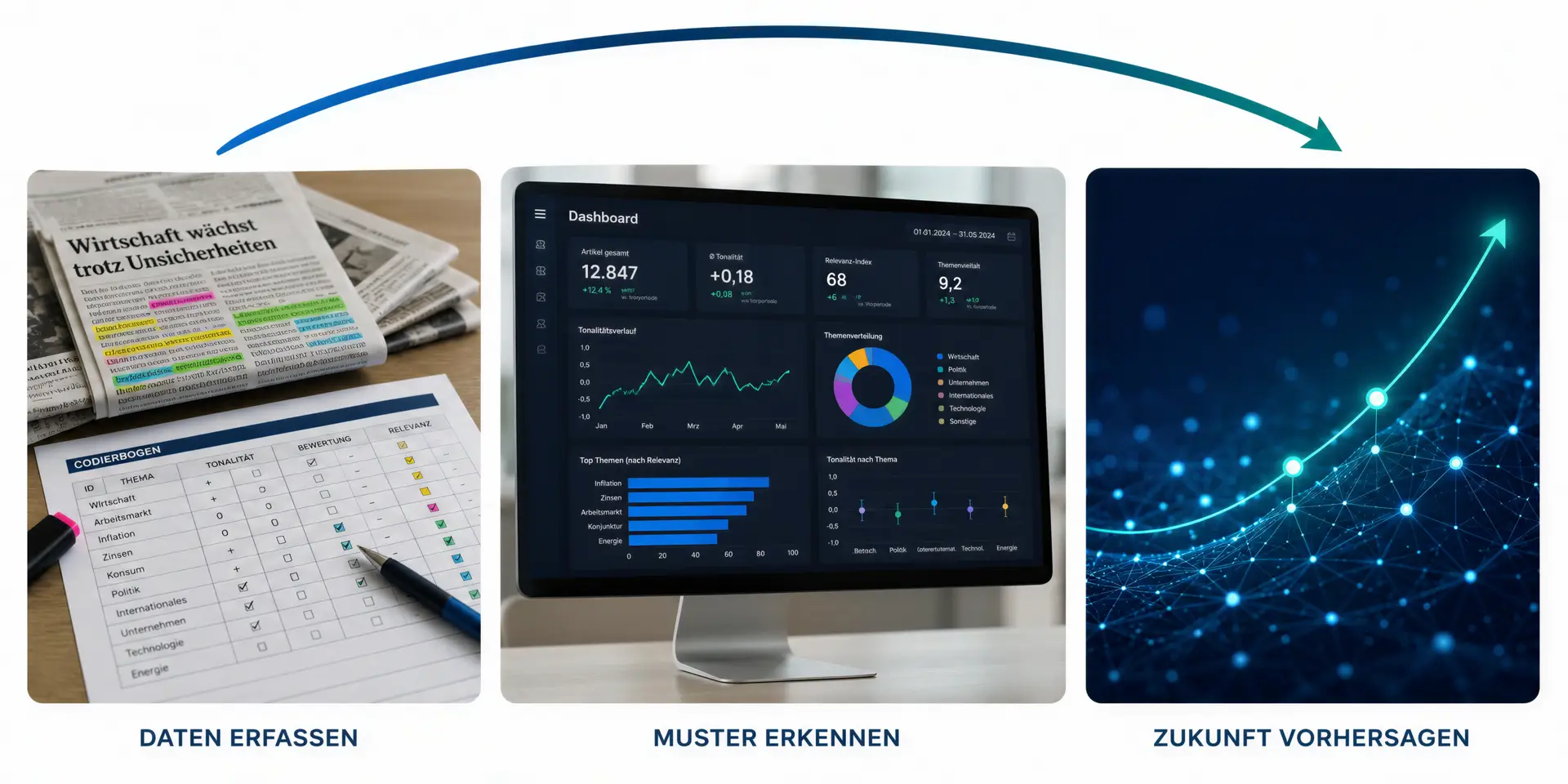
Choose an era and see how the guiding question, sourcing, and evaluation shift.
What was written about us?
The report came at the cut-off date, never to match the situation.
Anyone who wanted to know how a brand was perceived in the media did not get a number at the push of a button. They got a report. Trained coders read every single article and assigned values according to a fixed codebook: tone, key messages, topics covered, actors mentioned. Person by person, article by article. It was meticulous, often surprisingly precise—and it took time.
That led to a cadence that shaped the entire discipline. Media analysis came in fixed cycles: monthly report, quarterly report, and an evaluation at the end of a campaign. Each of these reports described a completed period that was already weeks in the past by the time it was delivered.
What was written about us? Past tense—and everyone accepted it. The press review was evidence; the analysis was a retrospective. No one expected a quarterly report to guide action while the situation was still unfolding.
What is remarkable is how early sourcing was solved. PMG, a joint venture of German newspaper and magazine publishers, created something at its founding in 2000 that was anything but a given at the time. Print articles were made available daily, digitally, and with copyright protection in a shared press database—still the largest of its kind in the German-speaking world. That was pioneering work, hard-won legally, and it is the foundation on which any serious media monitoring in Germany is built. So the articles were available in digital form early on. Only their evaluation remained what it had always been: manual work in fixed cycles.
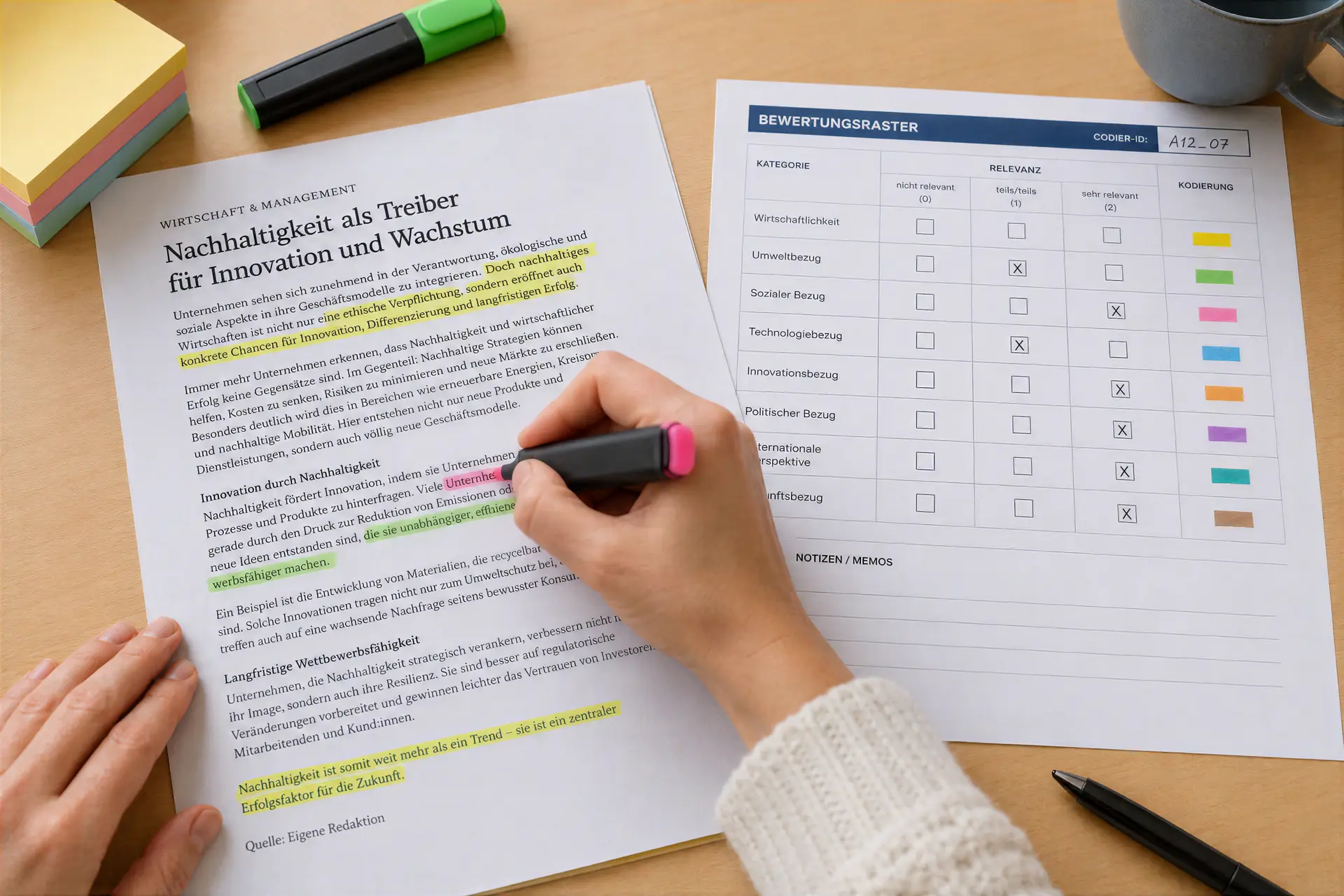
Fast in sourcing, slow in evaluation.
Today, a lot looks different—and most of it concerns sourcing. Hits land in your inbox in seconds. Alerts trigger as soon as a post appears. Dashboards update live. Anyone who asks what is being written about them right now gets an immediate answer.
The question has shifted. It now is: What is being written about us right now? But that is only half the truth. Because sourcing is one thing; reliable evaluation is another. And in many organizations, that still depends on the same two things as twenty years ago: human coding and fixed delivery dates.
Sure, there is automated sentiment. Every tool sorts posts into positive, neutral, negative. But anyone who has worked with these values knows how coarse they are. A report may sound critical overall, but only mentions your company in passing—and quite favorably. The algorithm stamps the entire article as negative, a red bar lights up in the report, and in Monday’s meeting someone discusses a problem that is not one. That is why, in practice, it gets corrected. A human takes a look, puts it into context, reassesses the tone. Exactly the coding work from back then—just with a machine suggestion in front of it.
The result is a peculiar in-between state. Sourcing runs in real time; depth arrives with a delay. You know the headline immediately, but the clean answer to what it means for your reputation often only comes in the next reporting cycle. Faster rear-view mirror—still a rear-view mirror.
And volume does not make it better. More sources, more channels, more posts do not mean more clarity. They mean more material that someone would have to code—and no one has the hands for it. The largest German-language press database alone feeds in over 200,000 items every day. This is where human evaluation hits a hard limit—not because it is bad, but because it does not scale.
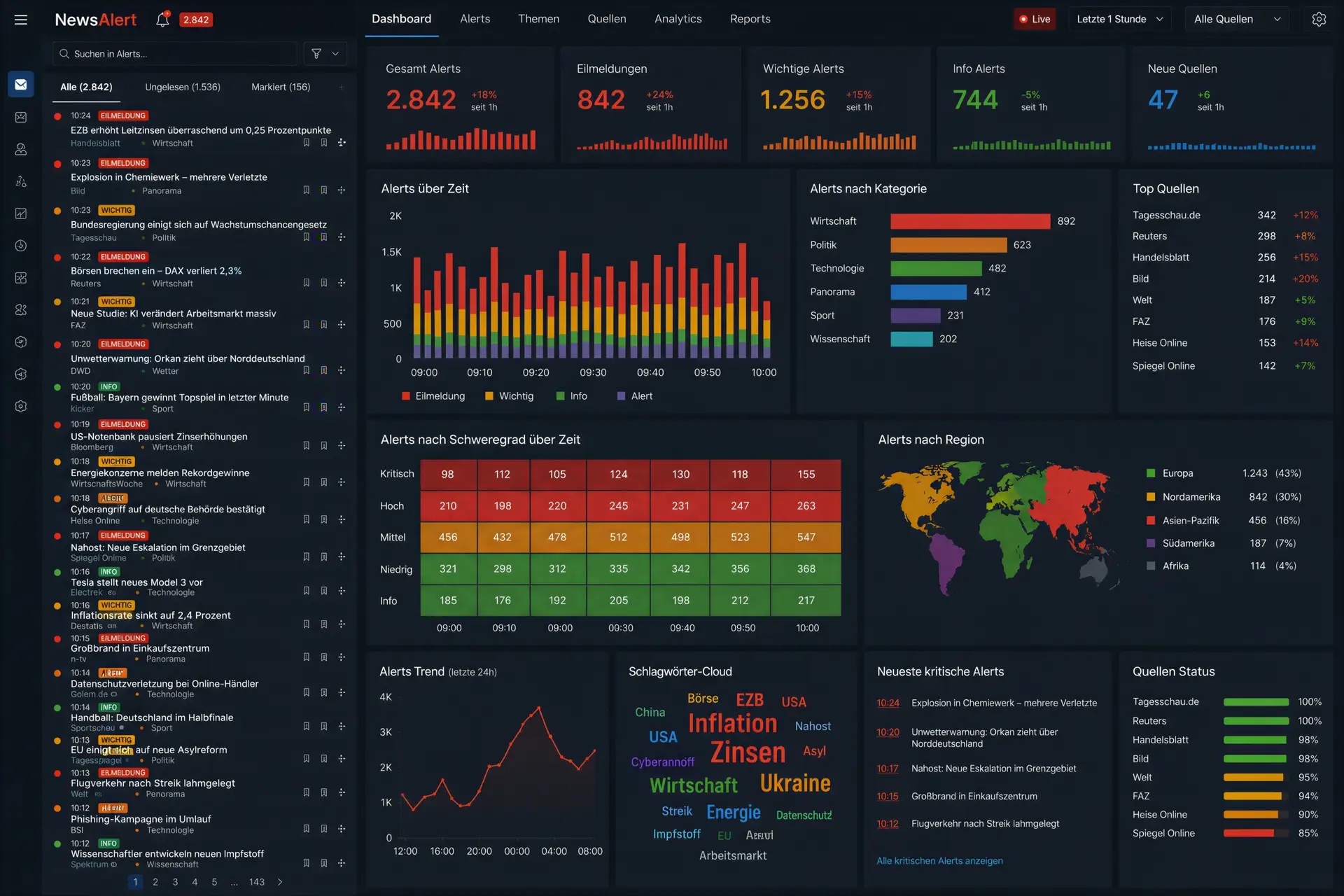
Continuous evaluation, not the next cut-off date.
This is where artificial intelligence comes into play—not as a gimmick, but out of necessity. The sheer volume forces evaluation to be automated. There is no realistic world in which enough people manually code every relevant item. In that sense, AI has to be used.
And by now, it can. Modern language models deliver a depth in evaluating tone, message, and context that used to be reserved for coders. They recognize whether a mention is central or incidental. They distinguish whether a critical tone is aimed at the company or at the surrounding topic. That quality is the real leap—not speed alone.
That makes the cut-off-date principle obsolete. If evaluation runs continuously, there is no longer any reason to wait for the monthly report. Tomorrow’s question is therefore not a variant of the old one. It is: What does this mean, and what comes next? A few examples of what defines this tomorrow:
- Velocity
Speed instead of volume
Not how many posts there are about a topic, but how quickly the number is rising. Fifty mentions that double within hours are more dangerous than five hundred stable ones. Acceleration is the early-warning signal, not the absolute value.
- Stance
Actor instead of average
Not the average of an article, but the position of a specific journalist, association, or politician toward you—tracked over time. That changes who you talk to, and in what order.
- Cluster
Patterns before the headline
Individual mentions are noise. It gets interesting when related posts condense into a pattern that does not yet have a name. Seeing this cluster early—before a leading outlet turns it into a headline—is the advantage that counts.
The human does not disappear. They move. Away from assembly-line coding and toward validation and interpretation. The machine evaluates the mass; the human checks the edge cases and decides what the insight means for communications. To be honest, AI coding is not error-free either. It needs oversight, spot checks, a vigilant eye. But it shifts scarce human time to where it is truly valuable.
How this transition from reactive to predictive monitoring plays out in practice is described, among others, by newslive in an analysis of predictive analytics in media monitoring.
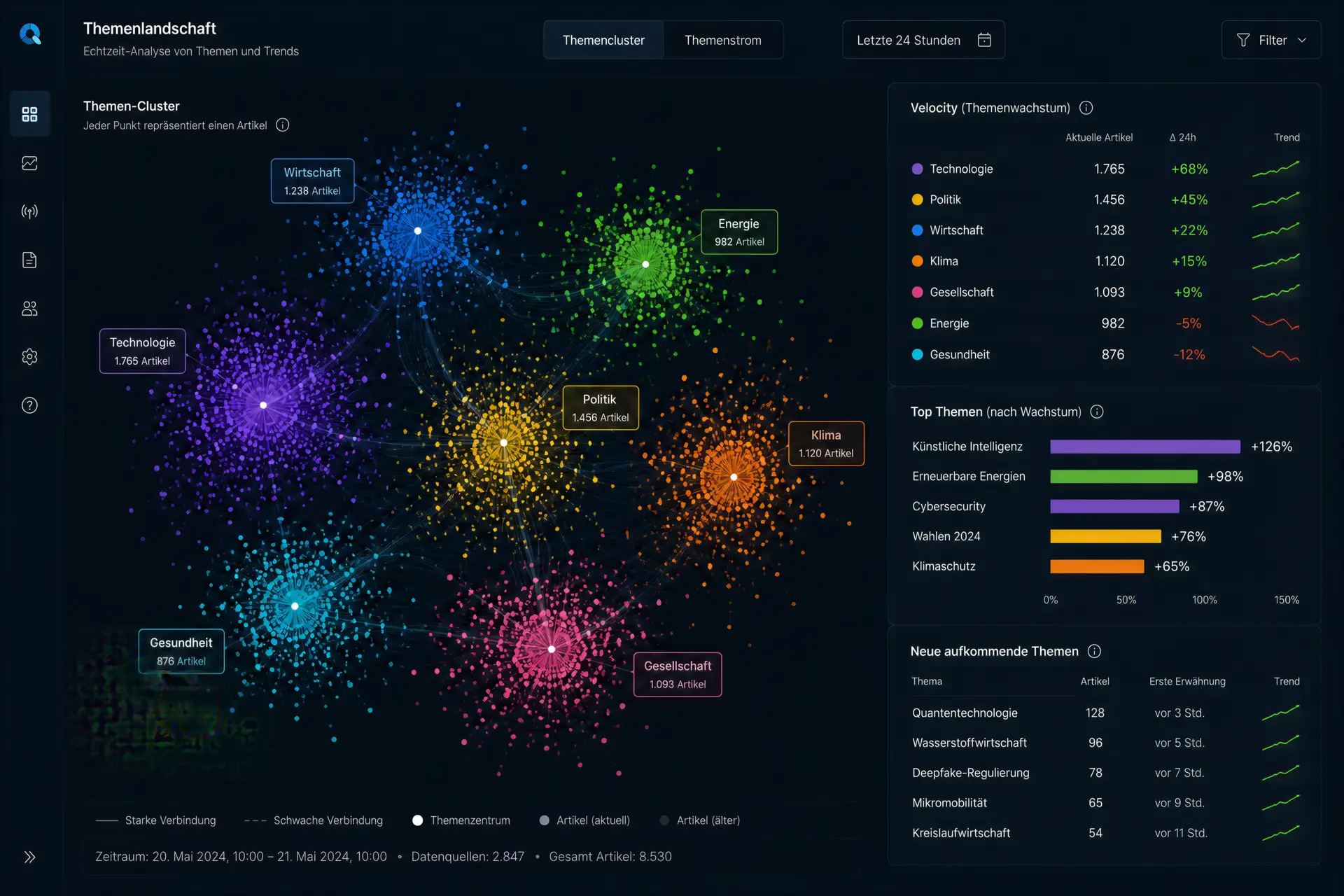
Why most get stuck in the second era.
It is rarely due to a lack of technology. The models are there. It is due to how established systems are built. They are designed as reporting tools—from the database to the interface—and built around the delivery date. Retrofitting such a system for continuous, predictive evaluation is roughly like trying to grind a rear-view mirror into a windshield. It works, but it never really looks forward.
On top of that, there is a mindset on the customer side. Many departments still buy media analysis as proof, not as steering. The report goes into the quarterly report, and the box is ticked. As long as media monitoring is understood as a documentation task, the potential of the third era remains unused—no matter how good the tool is.
Do not stay in the rear-view mirror.
auraPress reads the sources, evaluates continuously, and flags what your communications truly need to see. GDPR-compliant, servers in Germany. See what the third era looks like in day-to-day work.
Frequently Asked Questions
Does AI replace human coders completely?
No—it shifts their role. The machine evaluates the volume a human could never handle. The human checks edge cases, validates quality, and interprets what the data means for communications. Assembly-line work becomes oversight and contextualization.
Is predictive media analysis not just reading tea leaves?
No It does not predict individual headlines. It recognizes patterns in how topics move—such as acceleration and condensation—and derives what is likely to gain momentum. That is probability based on real signals, not guessing.
How reliable is automatic tone evaluation?
Significantly better than the coarse sentiment of recent years, but not infallible. Modern models capture context and distinguish whether criticism is aimed at the company or at the surrounding environment. Spot checks and human oversight are still necessary, especially with irony and nuances.
Is the switch worthwhile for smaller communications teams as well?
Especially there. If you have a small team, you can least afford to wait for the next cut-off-date report or chase a wave. Continuous evaluation and lead time make a bigger difference for a two-person team than for a corporate staff unit with twenty people.